

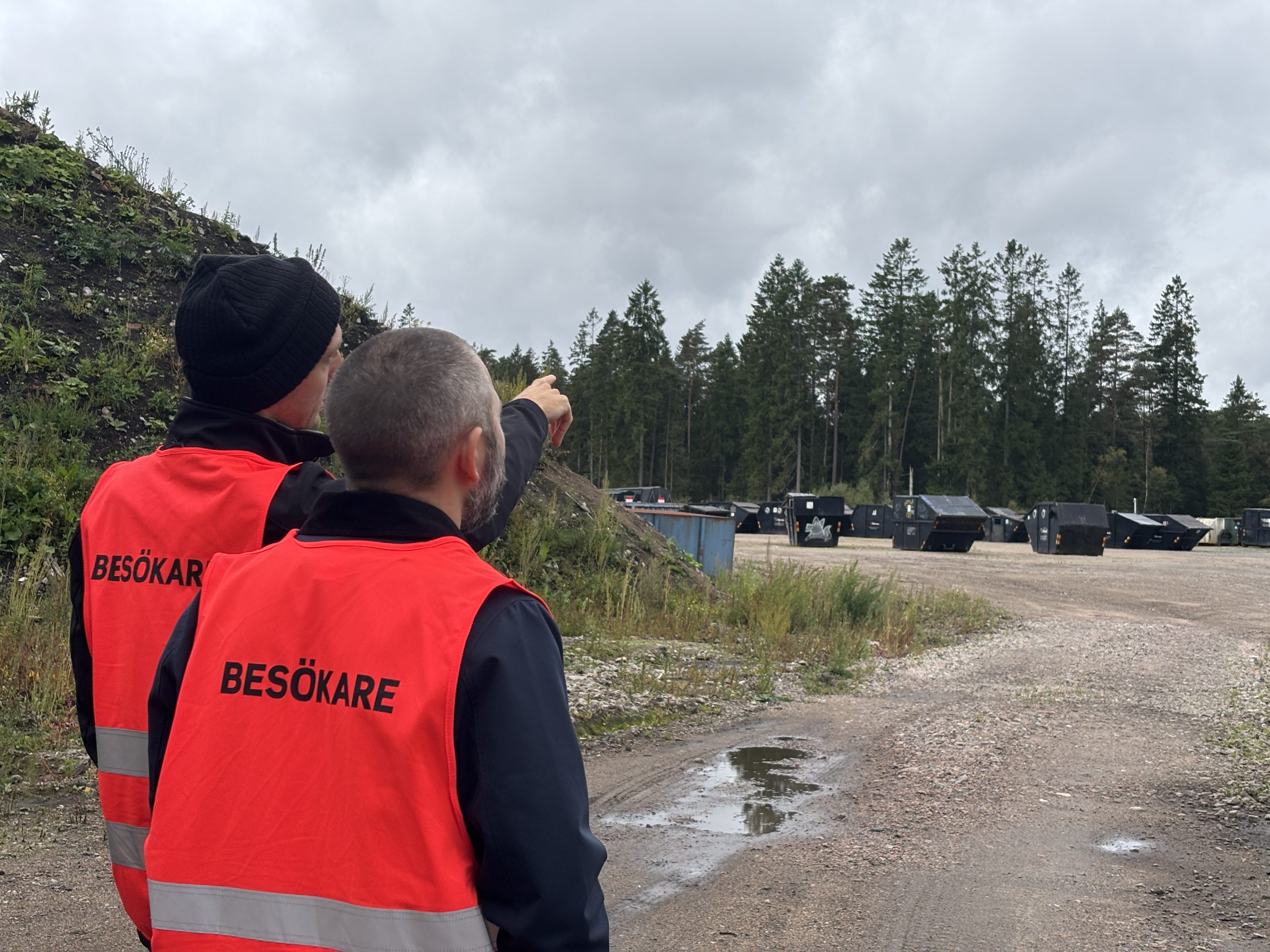
A study visit to Sweden was organised for representatives of the Kremenchuk Cluster communities, the Poltava Regional Military Administration and the WM4U team. The visit focused on studying Swedish approaches to waste management and inter-municipal cooperation, as well as practical work on the cluster concept, taking into account Ukrainian conditions and EU approaches.
In Borås, representatives of Ukrainian local authorities studied the role of municipalities in planning and organising the waste management system. The participants visited Borås Energi’s facilities and examined in practice approaches to:
- organising the collection of household waste;
- the separate collection of different waste fractions;
- the operation and environmental monitoring of landfill sites;
- the management of leachate and landfill gas;
- weighing, reporting, monitoring and data collection;
- the treatment of food and bio-waste and their use for energy production.
Particular attention was paid to solutions that improve the efficiency of the waste management system and reduce its environmental and climate impact.


An important part of the visit was the work on the cluster concept. During the workshops, participants analysed the current situation in the communities, the volumes and composition of waste, the existing infrastructure and the needs for its development. Together with Swedish experts, they identified strategic objectives, possible models of cooperation and the key elements of the future cluster concept — logistics, funding and the allocation of responsibilities.
The practical component was complemented by work on pilot initiatives in the field of bio-waste. Participants learnt about the Swedish approach to communicating with residents, analysing waste composition and organising collection systems. Based on the knowledge they had gained, they set priorities for implementing the simplest pilot initiatives
Separately, participants studied the experience of inter-municipal cooperation in Sweden. Representatives from the municipalities spoke about governance models, ownership structures, funding, decision-making and the organisation of joint work.

The study visit concluded with the identification of next steps. The participants agreed on priorities for further work, the allocation of responsibilities and issues requiring further consideration during the development of the cluster concept.
The event was held within the Swedish-Ukrainian WM4U Programme, which aims to support the development of modern, systemic, and environmentally responsible waste management solutions at local, regional and national levels.The programme is funded by the Government of Sweden through Sida and led by Avfall Sverige and SALAR International.