

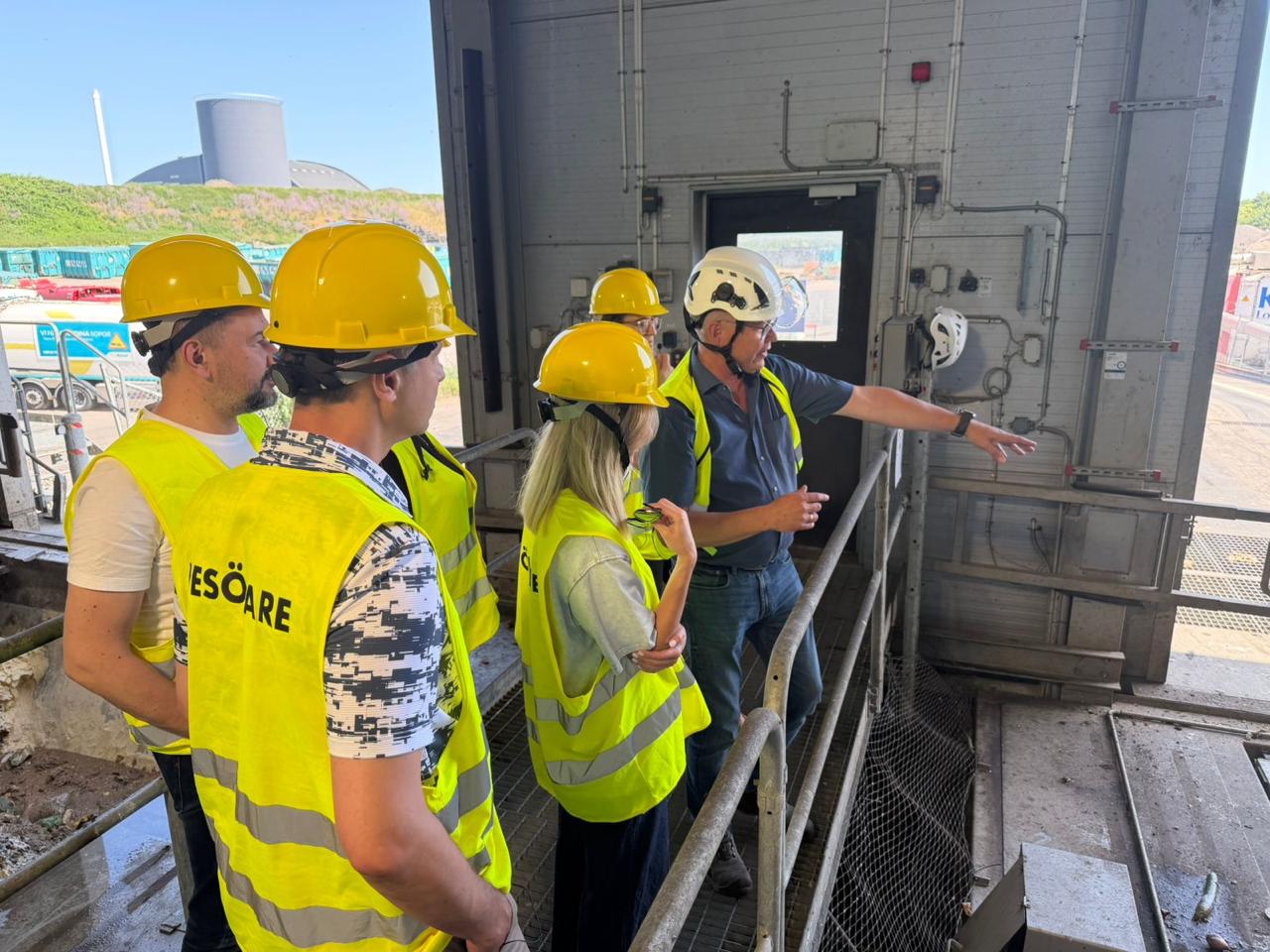
At the end of June, a Ukrainian delegation comprising representatives from the Ministry of Community and Territorial Development of Ukraine, the Verkhovna Rada Committee on Environmental Policy and Nature Management, and local authorities undertook a study visit to Sweden as part of the WM4U programme ‘Strengthening Municipal Waste Management in Ukraine’. The aim of the visit was to study Sweden’s experience in waste management, specifically the pricing model for household waste management and waste-to-energy conversion, and to develop practical solutions for implementing reforms in Ukraine.
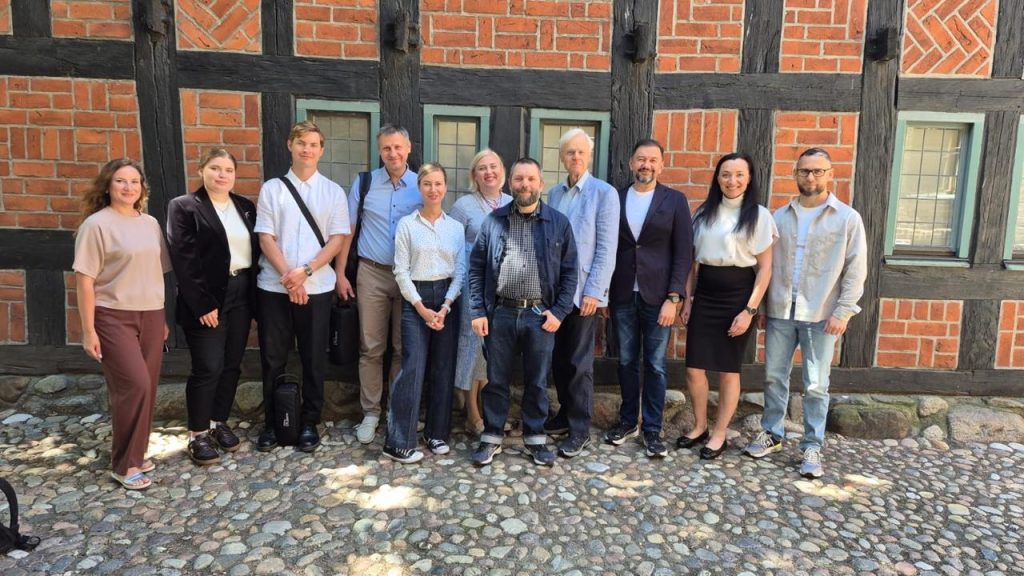
In addition, together with experts from Avfall Sverige, Sweco and COWI, the Ukrainian delegation examined issues of inter-municipal cooperation, the development of a cluster model and the prospects for implementing waste-to-energy technologies. Particular attention was paid to assessing the costs of waste disposal, post-closure maintenance of landfill sites, and the potential for adapting the PAYT (‘pay-as-you-throw’) model to Ukrainian conditions.
During the workshops, participants developed a shared vision of how to optimise the reimbursement of costs for the provision of services.
A separate discussion focused on the phased introduction of separate waste collection. Participants concluded that priority should be given to waste streams with the greatest environmental impact or resource value — organic, hazardous, medical and electronic waste, as well as plastic, metal and glass. At the same time, separate collection should only be introduced when the community is ready to ensure subsequent recycling, logistics, funding and the sale of secondary raw materials.
The participants devoted considerable attention to the design of future infrastructure. Swedish experts emphasised that, at the initial stage of a system’s development, simple, reliable and scalable solutions are often more effective than expensive and high-tech ones. In particular, for many communities, it may be advisable to develop transfer stations, which allow for the optimisation of logistics and a reduction in the distances over which waste is transported.
A separate session was devoted to transport logistics. Participants discussed the use of GIS data for route planning, the siting of transfer stations and waste treatment facilities, as well as ways to minimise long-distance transport and empty runs. This approach makes the system more cost-effective and better adapted to local conditions.
Communication emerged as a recurring theme throughout all the discussions. The participants concluded that the success of the reform depends not only on technical solutions, but also on understanding and support from local residents. That is why public engagement must become an integral part of the cluster model — from infrastructure planning to the implementation of separate waste collection.
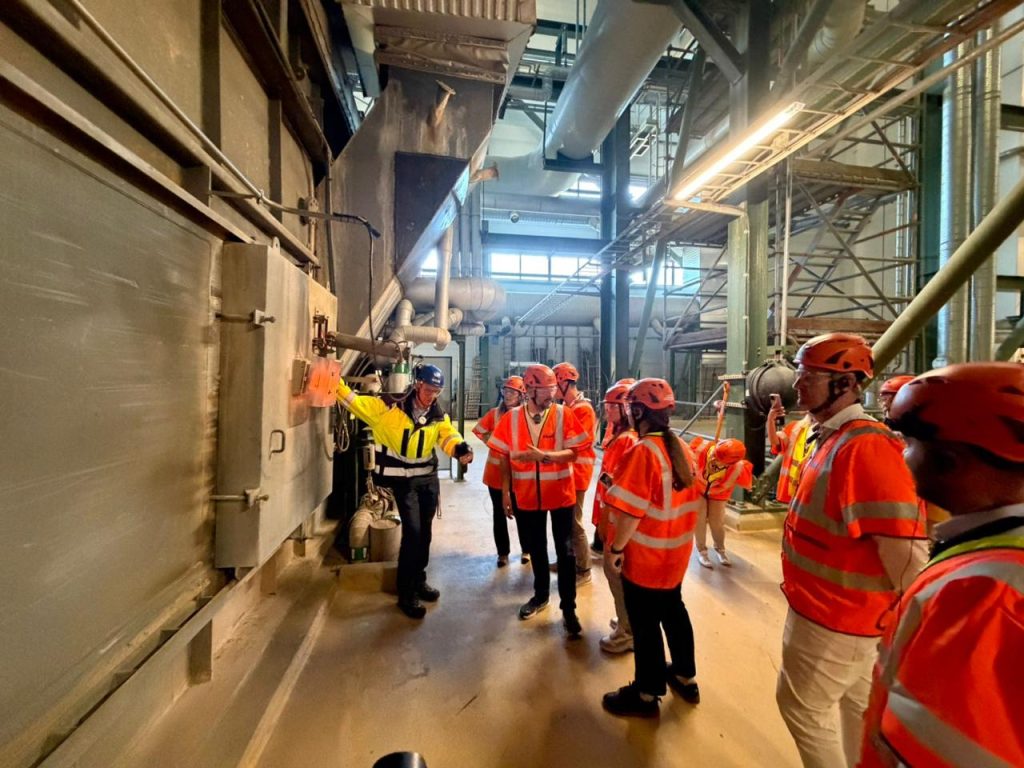
The practical part of the visit included a tour of the inter-municipal company NSR in Helsingborg, the Öresundskraft waste-to-energy plant and the Gasum biogas complex. Participants learnt about the operation of a modern landfill site, the landfill gas extraction system, the generation of heat and electricity from waste, and technologies for the anaerobic digestion of organic waste.
The experience gained will form the basis for further work on developing a cluster model for household waste management, improving the regulatory framework and introducing modern European practices in communities across Ukraine.
The visit took place as part of the Swedish-Ukrainian WM4U program “Strengthening Municipal Waste Management in Ukraine,” which aims to develop modern, systematic, and environmentally responsible solutions in the field of waste management at the local, regional, and national levels. The program is funded by the Swedish government through Sida and implemented by Avfall Sverige and SALAR International.