

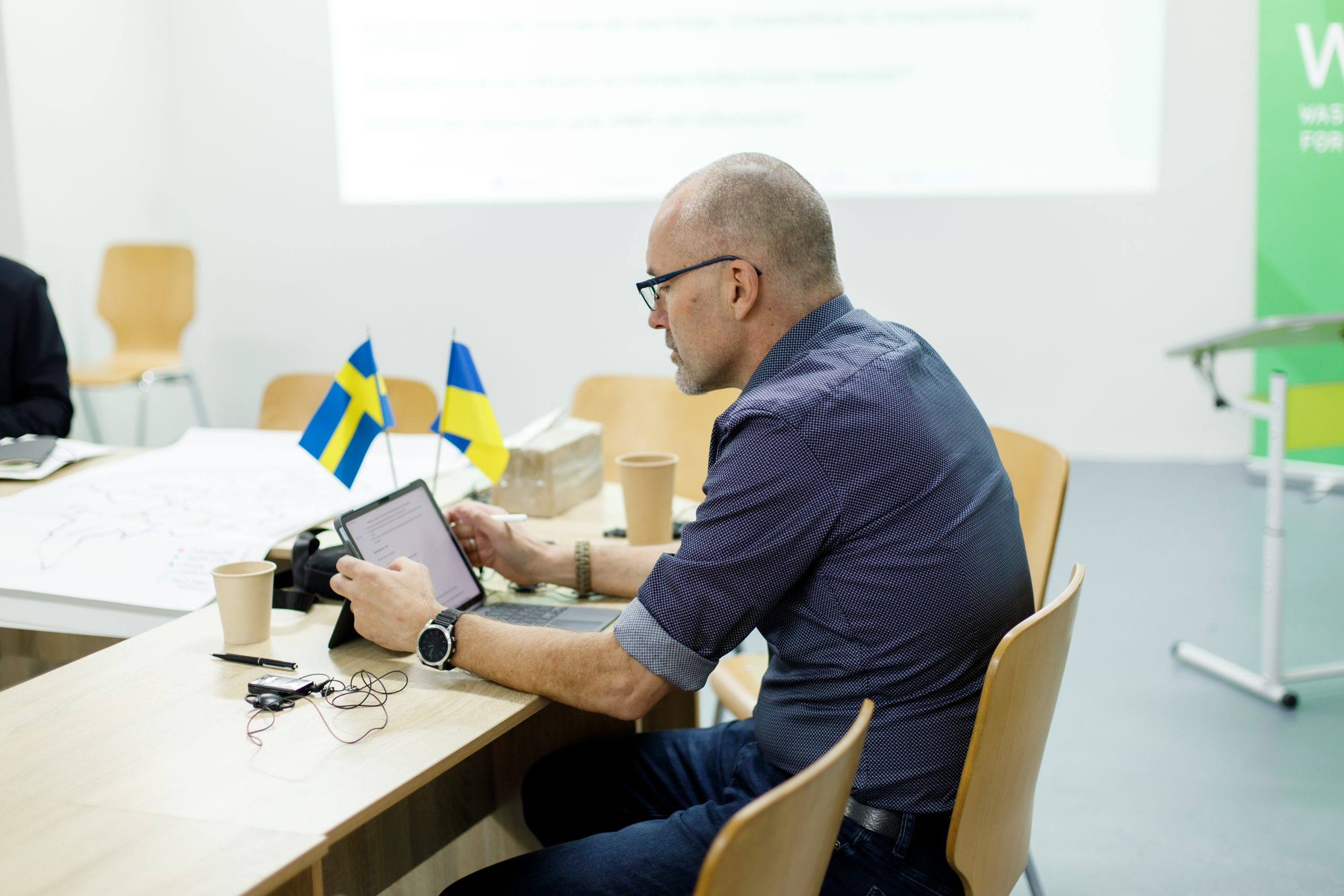
Legal nuances often pose one of the biggest obstacles for communities seeking to receive humanitarian aid to develop their solid waste management systems. That is why the WM4U Program held a webinar dedicated to the legal requirements and practical aspects of processing humanitarian aid.
During the webinar, participants walked through the entire process — from receiving humanitarian aid to transferring it to the end recipient, including customs clearance, accounting, and utilization. Experts paid particular attention to changes in legislation and requirements that will help communities avoid legal risks.
During the webinar, the experts highlighted several important points that should be taken into account right now.
Verifying the enterprise’s status. Before receiving humanitarian aid, it is important to determine whether a municipal enterprise operates a critical infrastructure facility: this is one of the conditions for the Ministry of Development’s approval of the transfer of humanitarian aid.
- Preparing documents in advance. A properly prepared set of documents significantly reduces the approval time and helps avoid additional requests.
- Maintaining proper records of humanitarian aid. Documenting the transfer, use, and reporting of humanitarian aid is a mandatory legal requirement and helps avoid problems during inspections.
- Taking into account the specifics of transferring machinery and equipment.
- For certain types of humanitarian aid, particularly vehicles, the law provides for special rules regarding registration, operation, and so on.
Webinar participants received answers to their questions regarding procedures for approving humanitarian aid, interacting with government agencies, and applicable regulatory requirements.
WM4U experts are currently finalizing a policy brief that will systematize the relevant legislation, provide step-by-step explanations of procedures, and compile practical recommendations for communities. The document will be useful not only to participants in the pilot clusters but also to all communities in Ukraine planning to receive humanitarian aid to develop their solid waste management systems.
The analytical note will be published as open access on the WM4U website in the near future.
The event was held within the Swedish–Ukrainian WM4U Programme, which aims to support the development of modern, systemic, and environmentally responsible waste management solutions at local, regional and national levels.