

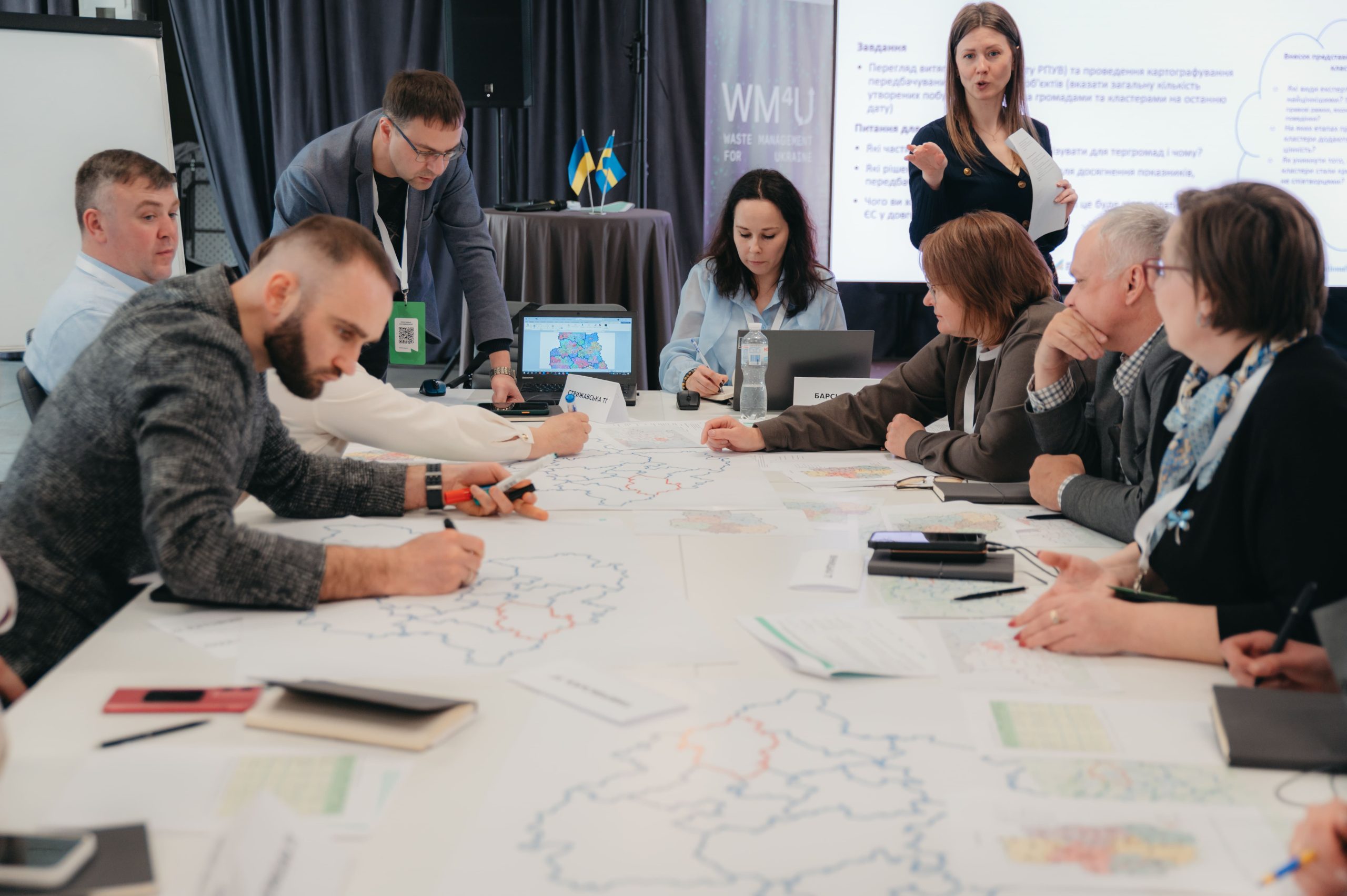
In June, a series of online meetings was held to prepare baseline data for the development of local waste management plans. Representatives of local communities from the Kharkiv, Poltava, Vinnytsia, and Ivano-Frankivsk regions participated in the events.
Initially, participation in the meetings was planned for communities in the pilot clusters; however, at the request of regional partners, representatives from communities in the four pilot regions joined the discussions. This allowed for a broader range of participants and ensured a shared understanding of the approaches to preparing local waste management plans.
During the meetings, programme experts presented the requirements for collecting and analyzing baseline data — a crucial stage in developing a local waste management plan. The quality and completeness of the baseline data determine how well-founded subsequent decisions regarding the development of the community’s waste management system will be.
Participants discussed exactly what data needs to be collected for a baseline analysis. This included demographic, social, natural-geographic, and economic characteristics of the communities; existing waste management infrastructure; technical capabilities of service providers; volumes of various waste streams generated; tariffs; financial and economic indicators; and more.
During the meetings, it was emphasized that communities should analyze the management of hazardous, medical, industrial, construction, biodegradable, and electronic waste, as well as batteries and accumulators, sewage sludge, green waste, and demolition waste — all of which have become particularly relevant in the context of the war.
The meetings covered the step-by-step process of preparing a plan — from forming a working group and analyzing initial data to conducting a strategic environmental assessment, obtaining approval for the document, and having it adopted by the local council.
These online meetings served as a crucial preparatory step for communities beginning to develop local waste management plans. Standardized approaches to data collection and analysis will help establish a solid foundation for future infrastructure planning, identifying community needs, and making effective management decisions.
The events took place as part of the Swedish-Ukrainian WM4U programme “Strengthening of Municipal Waste Management in Ukraine,” which aims to develop modern, systematic, and environmentally responsible solutions in the field of waste management at the local, regional, and national levels. The programme is funded by the Government of Sweden through Sida and implemented by Avfall Sverige and SALAR International.