

We conducted a survey amongst representatives of pilot territorial communities to identify current training needs.
The study involved 86 respondents from 42 territorial communities in the pilot clusters. These included managers, waste management specialists and policy-makers within the territorial communities.
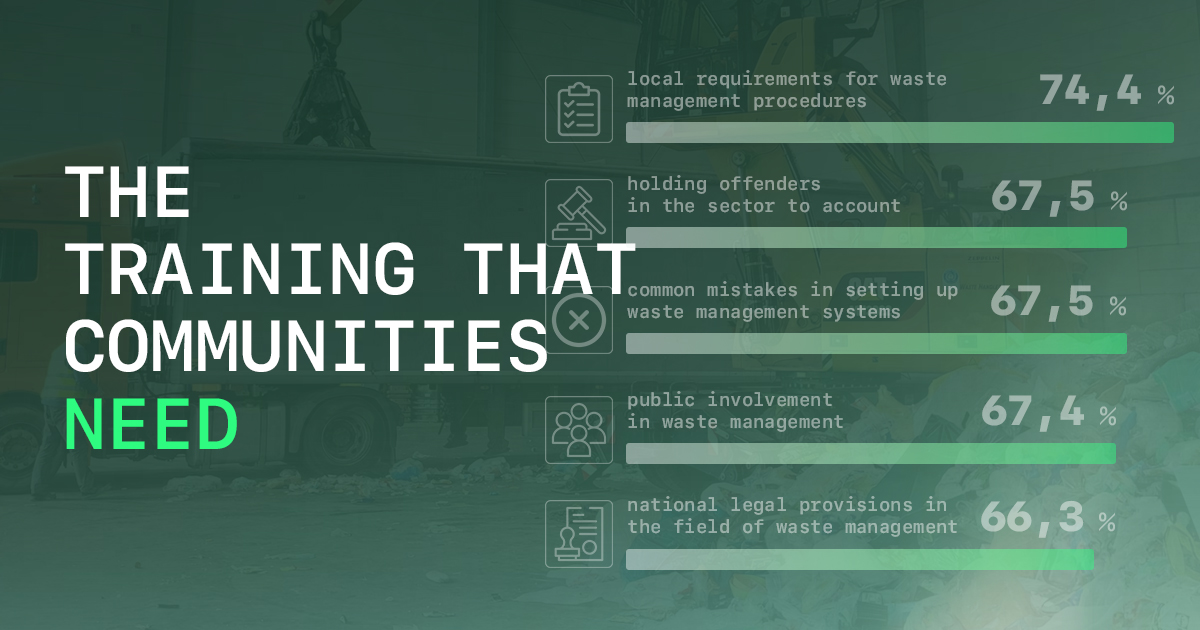
The topics that the majority of respondents consider most important and relevant to their work are:
- local requirements for waste management procedures – 74.4 per cent
- holding offenders in the sector to account – 67.5 per cent
- common mistakes in setting up waste management systems – 67.5 per cent
- public engagement in waste management – 67.4 per cent
- national legal frameworks for waste management – 66.3 per cent
- preparation of strategic planning documents and local regulatory documents – 66.3 per cent
- the impact of waste on local development, the environment, climate, health and nutrition – 62.8 per cent
- financing of municipal waste management – 62.8 per cent
- principles of municipal waste management/environmental policy – 61.6 per cent
Respondents also mentioned additional topics, knowledge of which would be useful in their work.
These include preparing projects to attract international funding, as well as practical sessions based on real-life case studies.
The survey results will form the basis for the further development of the WM4U training component, which aims to strengthen the professional capacity of specialists at local, inter-municipal and regional levels. Based on the assessment of training needs, the Programme will develop training materials and practical guidance on key issues in municipal waste management — from system planning to financing, resource recovery and the achievement of set targets.